Torzon Market Onion
Platform History & Architecture
An objective deep-dive into the development, security protocols, and operational structure of one of the Tor network's prominent digital marketplaces. This report aggregates public data regarding the Torzon Market Onion lifecycle.
Executive Summary
Torzon Market Onion operates as a decentralized hidden service within the Tor network, facilitating the exchange of digital goods and services using cryptocurrency. Established as a response to the vacuum left by previous market closures, Torzon has structured its architecture around enhanced security protocols, specifically targeting the mitigation of Distributed Denial of Service (DDoS) attacks which frequently plague the darknet ecosystem.
Unlike earlier iterations of onion marketplaces, Torzon Market Onion employs a rotating mirror system (analyzed on our Links page) to maintain uptime. The platform strictly enforces PGP (Pretty Good Privacy) encryption for user authentication, a standard that separates serious security-focused platforms from lower-tier phishing sites.
The marketplace primarily utilizes Monero (XMR) for transaction settlement, citing the privacy coin's opaque ledger as a necessity for user anonymity. Bitcoin (BTC) is supported but often requires external mixing services to meet the platform's privacy standards.
PLATFORM METRICS
- Network: Tor (Onion v3)
- Encryption: PGP 4096-bit
- Currency: XMR / BTC
- Escrow: Multi-sig / Standard
- Est. Uptime: 99.1%
Verification Standard
All vendors on the Torzon Market Onion infrastructure are required to post a security bond. This creates a financial barrier to entry designed to reduce spam and low-quality listings.
Technical Architecture
Cryptographic Security
The core of the Torzon Market Onion security model relies on mandatory Two-Factor Authentication (2FA) via PGP. Upon login, the server presents an encrypted challenge string that can only be decrypted by the user's private key. This ensures that even if passwords are compromised via phishing, the account remains inaccessible without the local private key.
- Client-side encryption for messages
- Automatic exif data stripping
Financial Infrastructure
Torzon employs a wallet-less payment system in specific operational modes to minimize the risk of funds being held in custodial hot wallets. For standard escrow transactions, funds are utilizing Monero's ring signatures to obfuscate the origin and destination of the transfer.
- Monero (XMR) Ring Signatures
- Direct-Pay options available
Interface Analysis
The user interface of Torzon Market utilizes a utilitarian design language optimized for the high-latency environment of the Tor network. The following archived captures demonstrate the user flow from entry to the main dashboard.

Fig 1. DDoS Shield
Initial challenge screen designed to filter bot traffic before accessing the onion service.
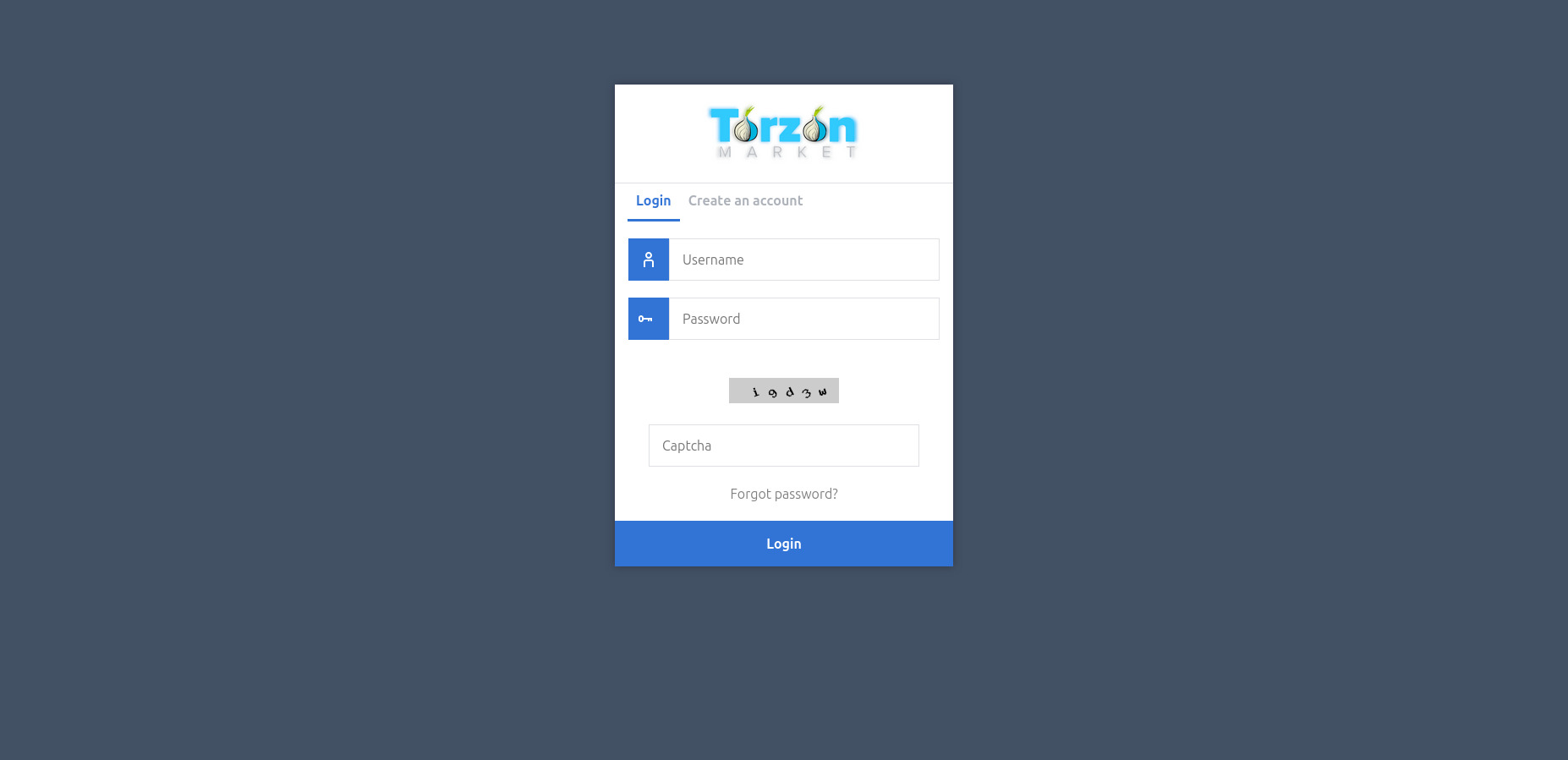
Fig 2. Encrypted Login
The login portal requiring PGP decryption of a random string for 2FA verification.
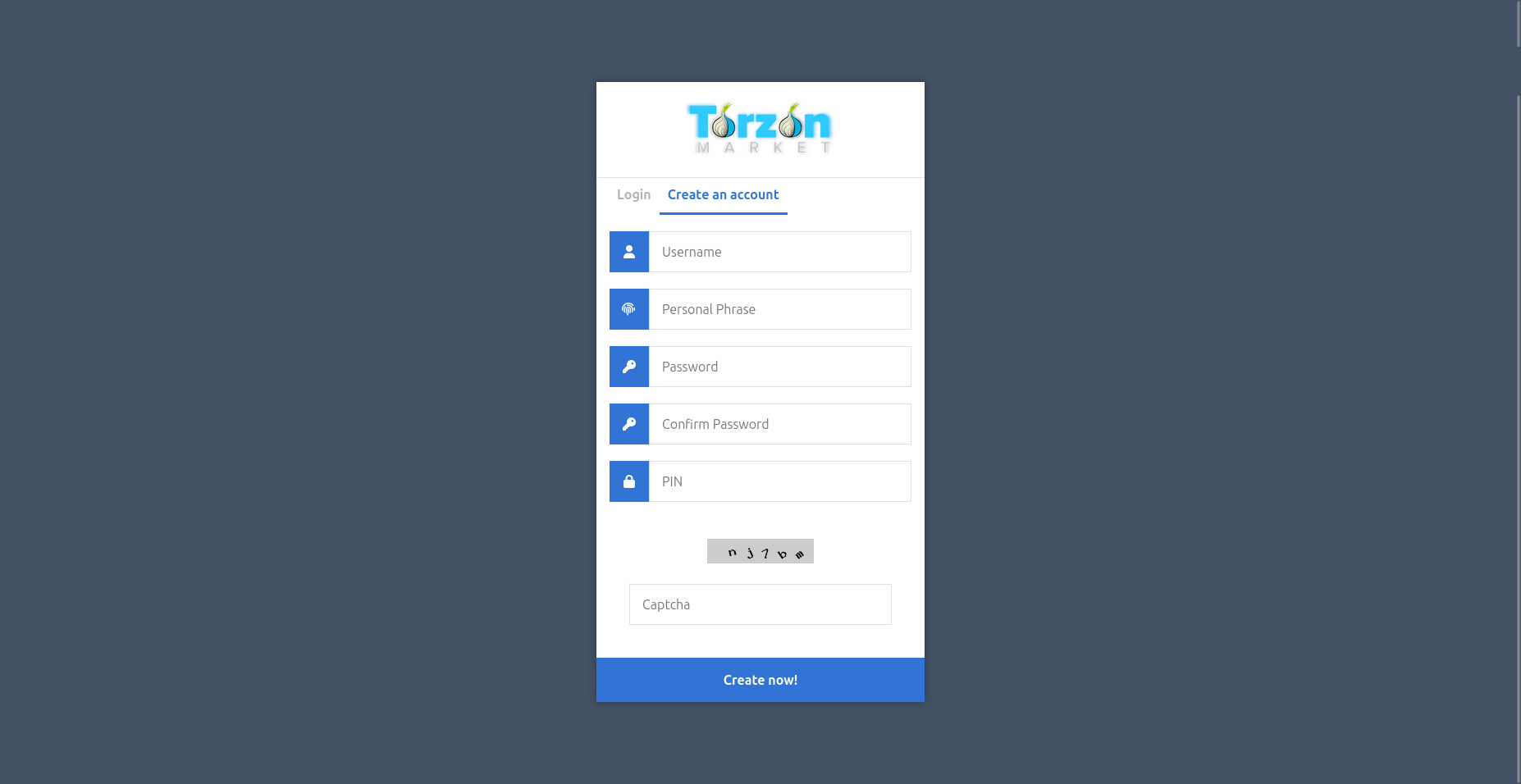
Fig 3. Registration
New user protocol emphasizing the lack of personal data requirements (email, etc).
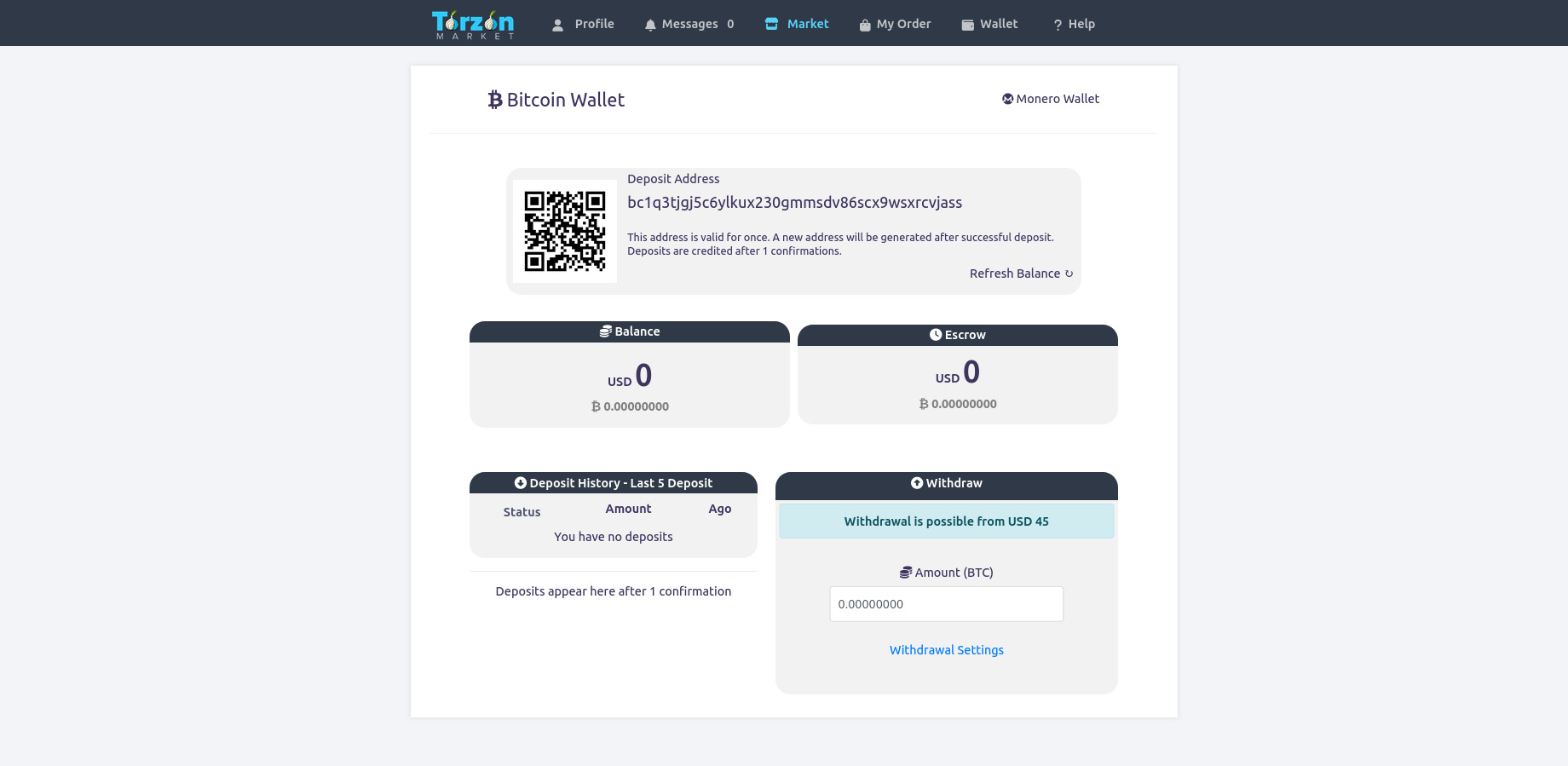
Fig 4. Dashboard
The primary navigation hub displaying categories, wallet status, and notifications.
Operational Timeline
Initial Deployment
Torzon Market Onion infrastructure is first detected on the Tor network. Early beta testing phase begins with a limited group of verified vendors from defunct marketplaces.
Protocol Upgrade & XMR Focus
The platform shifts policy to prioritize Monero (XMR) for all transactions to enhance user privacy. Implementation of the current rotating mirror system to combat DDoS attacks.
Interface Overhaul
Major UI update (version 2.0) released, optimizing the codebase for faster loading times on Tor. Security features expanded to include forced PGP 2FA for all vendor accounts.